News details
17
2026-10
Hydraulic Jack Industry Observation: Demand for large-tonnage gas-liquid models continues to grow in the auto repair market
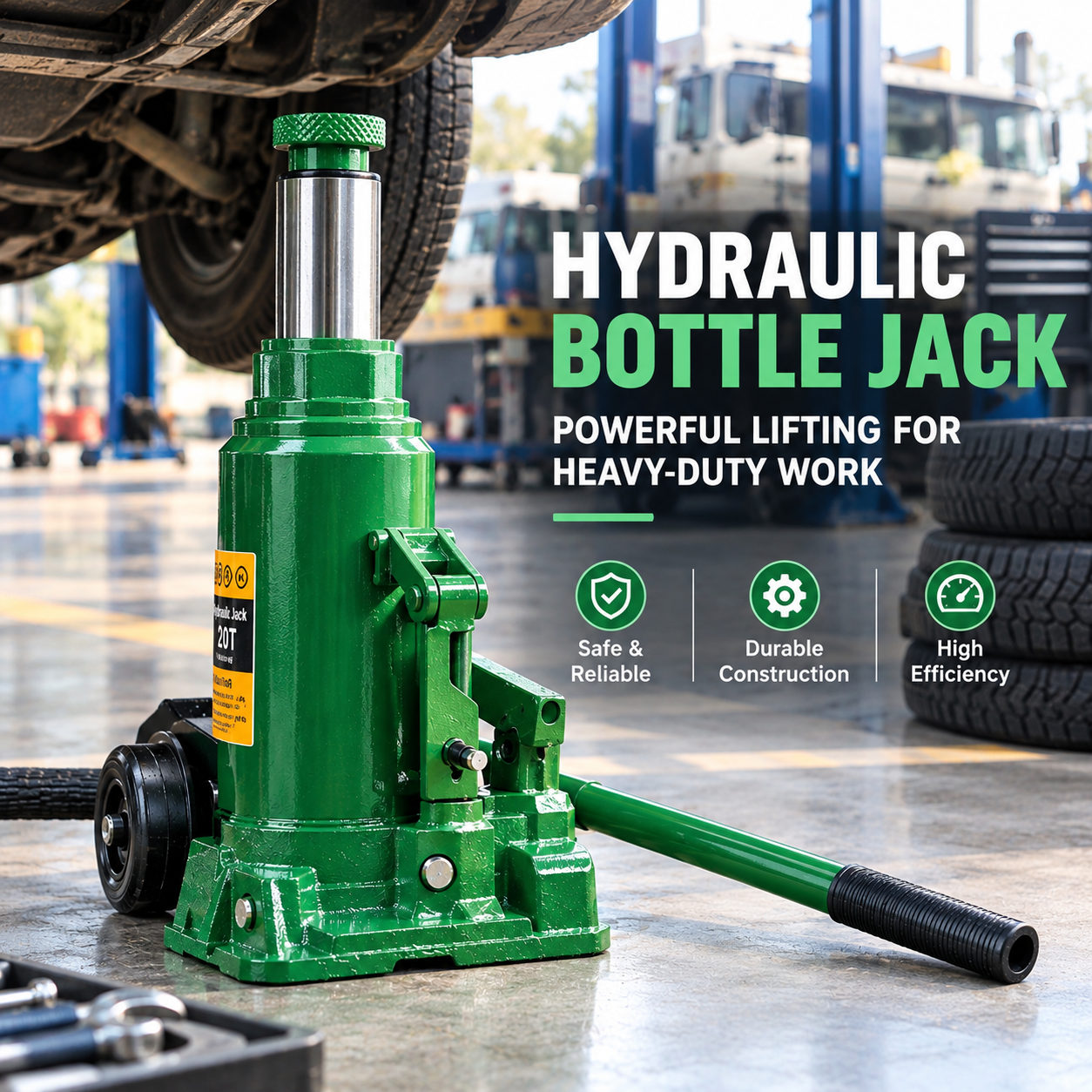
Hydraulic jack is the most basic heavy-duty lifting tool in the field of automobile repair and engineering maintenance. It relies on the Pascal hydraulic principle to lift heavy objects with a small input force. It is widely used in passenger car and commercial vehicle maintenance, tire vulcanization operations, engineering machinery maintenance and other scenarios. In the context of the continuous expansion of the global automotive aftermarket, large-tonnage gas-liquid jacks have become a key category for maintenance stores to upgrade equipment.
From the perspective of market structure, the automotive maintenance field has long been the largest application market for hydraulic jacks. The demand for heavy-duty lifting equipment of 20 tons and above has increased significantly in commercial vehicle maintenance, tire repair and vulcanization workshops. In emerging markets such as Latin America and Southeast Asia, the number of small and medium-sized independent repair shops and tire repair stores is increasing year by year. These customers prefer jacks that are portable and can have both pneumatic and manual modes. When the air source is sufficient, it relies on pneumatic to quickly lift. When there is no air compressor, it can switch to manual hydraulic pressure to adapt to the changing working conditions of the maintenance workshop.
At the product technology level, industry development focuses on three directions: structural reliability, sealing durability and safety protection. Mainstream heavy-duty jacks generally use thickened cylinders and chrome-plated piston rods to improve wear resistance and leakage resistance; an overload relief valve is standard to prevent risks caused by overload operations. At the same time, safety standards in various countries continue to tighten, putting forward higher requirements for load redundancy, pressure relief control, and fatigue testing. This forces the manufacturing end to optimize welding processes, sealing components, and factory inspection processes to reduce common problems such as false tonnage, oil leakage, and excessive pressure relief.
Industry research shows that improper use of jacks accounts for a high proportion of accidents in maintenance workshops. The industry association continues to remind: The jack is only used for lifting. After the lifting is completed, it must be equipped with an independent safety bracket to carry the load. Personnel are prohibited from working under the vehicle solely relying on the jack support. Overloading, uneven foundations, aging hydraulic oil, and worn seals are all major causes of equipment failure. Regular maintenance and scrap management have become the focus of workshop safety management.
In terms of category trends, traditional manual hydraulic jacks still maintain a basic market; the penetration rate of gas-liquid integrated models in heavy truck maintenance and tire vulcanization workshops has increased. The core advantage is that it reduces manual labor intensity and is suitable for high-frequency continuous lifting operations. Lightweight, corrosion-resistant, and adaptable to multiple environmental working conditions are the main directions for current product iterations.
From the perspective of international trade, automobile maintenance hydraulic jacks are basic maintenance equipment, and overseas buyers are paying more and more attention to product compliance certification, authenticity of load parameters and long-term spare parts supply capabilities. Purchasers have gradually shifted from simply comparing prices to evaluating the service life of equipment and the availability of after-sales repair parts.
summary
As a basic heavy-duty tool, hydraulic jacks will not be replaced by the popularity of large fixed lifting equipment. Especially small and medium-sized independent auto repair and tire vulcanization stores, the demand for 20-ton gas-liquid jacks remains stable. In the future, industry competition will shift from pure price competition to comprehensive competition in product safety standards, durability, and supporting maintenance services.