
News details
16
2026-10
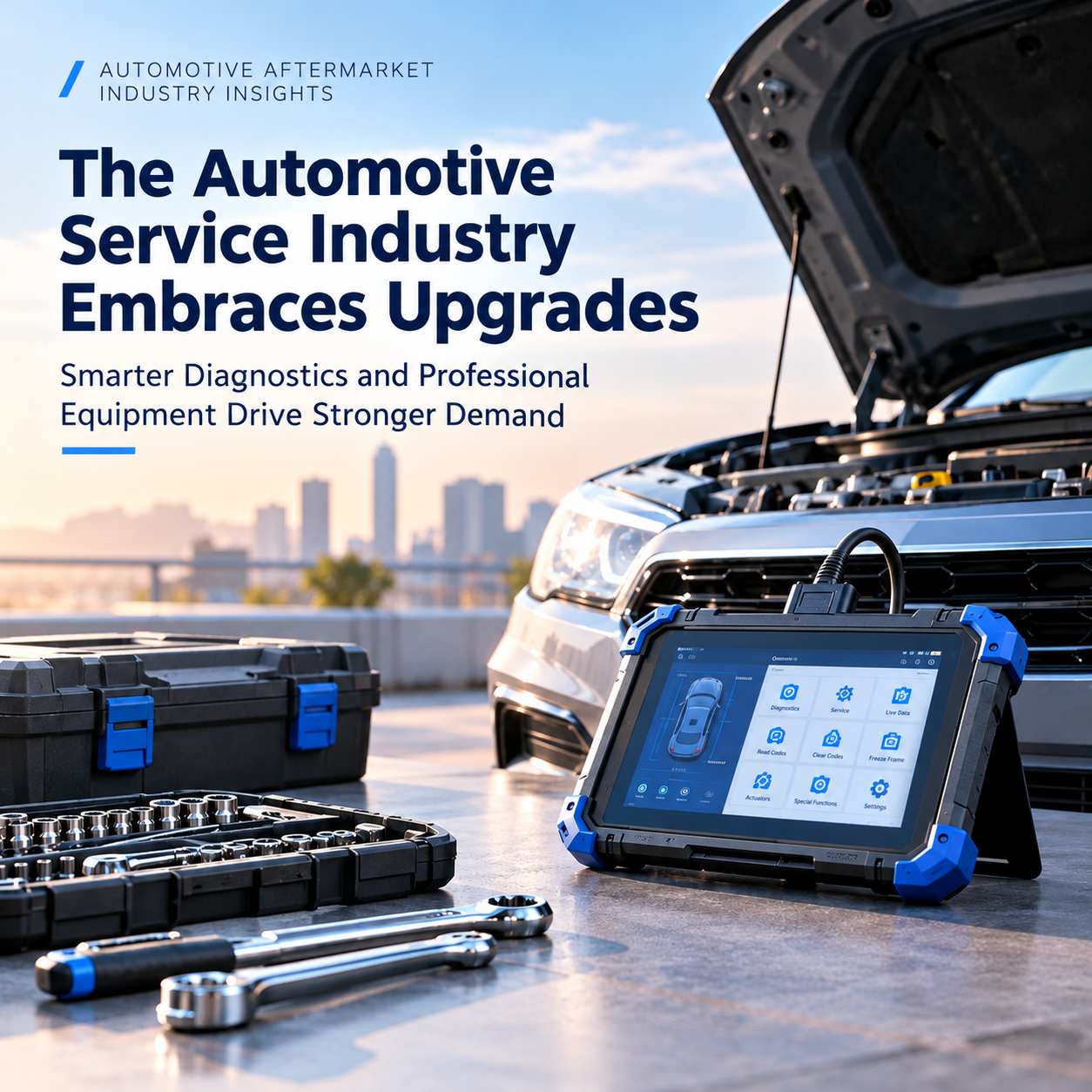
The automobile maintenance industry is ushering in technological upgrades: the demand for intelligent diagnosis and professional automobile maintenance equipment continues to attract attention
1. Vehicle technology is becoming increasingly complex, and maintenance and diagnosis capabilities have become more important.
Modern cars integrate more and more electronic control systems, driver assistance functions and intelligent technologies. When a vehicle breaks down, the problem may involve mechanical components, or it may be related to sensors, control modules, or electronic systems.
This means that the traditional maintenance method that relies on empirical judgment increasingly needs to be combined with professional testing tools.
Automobile diagnostic instruments, testing equipment and related maintenance tools can help maintenance personnel identify the cause of faults more effectively, reduce unnecessary disassembly and assembly, and improve the accuracy of the maintenance process. For independent auto repair shops, choosing equipment suitable for their own business scope can help them cope with changing vehicle maintenance needs.
2. The development of new energy vehicles brings new directions to maintenance services
As the number of new energy vehicles increases, the service content of the maintenance industry is gradually expanding. In addition to routine tire, braking system and chassis inspections, power battery condition assessment, high-voltage electrical system inspection and thermal management system maintenance have gradually become areas of focus for professional maintenance services.
In July 2026, relevant reports in the automotive industry mentioned that the British maintenance network is promoting the popularization of electric vehicle battery health testing services, allowing battery status inspections to be integrated into scenarios such as routine maintenance, second-hand car inspections, and vehicle transaction evaluations.
This trend shows that new energy vehicles do not eliminate the need for maintenance, but promote the development of maintenance services in the direction of more professional testing and maintenance.
For maintenance equipment buyers and auto maintenance product dealers, understanding the maintenance characteristics of different car models and paying attention to the corresponding testing tools and supporting equipment will help to better plan product procurement and business layout.
3. Professional auto maintenance equipment is still an important foundation for repair stores
No matter how your car"s powertrain changes, safety inspections, component replacement and routine maintenance remain important parts of your car repair business.
Lifts, hydraulic jacks, tire disassembly equipment, wheel balancing machines, pneumatic tools and various manual maintenance tools still have practical application value in maintenance workshops of different sizes.
At the same time, maintenance companies are paying more and more attention to the equipment’s operational convenience, stability, maintenance costs, and applicability in different working scenarios.
For equipment suppliers, in addition to providing the product itself, clear product specifications, scope of application, operating instructions and after-sales support can also help buyers evaluate whether the product meets their market needs.
4. Procurement inspiration brought by industry trends
The technological upgrading of the automobile repair industry does not mean that all repair stores need to replace the entire set of equipment at once. For many independent repair shops and auto maintenance product dealers, gradually improving equipment configuration based on existing business is still a way worth considering.
During the procurement process, you can focus on three aspects:
-
Product applicability: Choose the right equipment based on the vehicle type being serviced, frequency of operations and workshop space.
-
Quality and Maintenance: Pay attention to product structure, key components, supply of wearing parts and long-term use costs.
-
Supply chain stability: Comprehensive evaluation of supply capacity, delivery cycle, product specifications and after-sales support to establish a more stable procurement cooperation relationship.
For auto maintenance equipment suppliers targeting overseas markets, understanding the development direction of the local maintenance industry and providing suitable product combinations for different types of buyers will help establish long-term cooperative relationships.
Conclusion
The automobile maintenance industry is gradually moving from a single mechanical maintenance to a service model that combines mechanical maintenance, electronic diagnosis and professional testing. The development of new energy vehicles has further expanded the scope of maintenance services, while traditional auto maintenance tools and basic maintenance equipment are still an important part of daily operations.
In the future, auto maintenance equipment that can take into account product practicality, quality stability and market adaptability will continue to play an important role in repair stores, auto service centers and professional equipment distribution channels.
For practitioners and buyers in the automobile repair industry, continuing to pay attention to technological changes and rationally planning equipment configuration will help better adapt to industry development.